


How Do Police Prove Impairment Without a Breath Test In Illinois?
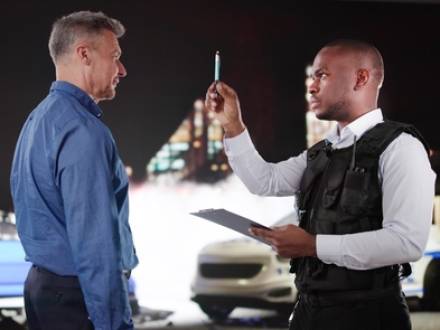 Police can charge you for DUI without a breath test in Illinois. They can build a case using their own observations, physical tests, and other evidence gathered at the scene. Refusing a breath test does not make a DUI charge go away. In fact, it can sometimes make things more complicated. Understanding how the State builds these cases is one of the first steps toward building a strong defense. If you are facing a DUI charge in 2026, our Kane County, IL DUI defense lawyer has over 20 years of legal experience and can help you understand how to fight the charge against you.
How Do Illinois Police Build a DUI Case Without a Breath Test?
When a breath test is not available, or a driver refuses one, police rely on everything else they observed from the moment they pulled the car over. That includes how you were driving before the stop, how you looked and acted during the stop, how you performed on field sobriety tests, and any other evidence collected at the scene.
Illinois law under 625 ILCS 5/11-501 defines driving under the influence as operating a vehicle while impaired by alcohol, drugs, or any combination of substances. The statute does not require a breath test result to support a conviction. The state only needs to prove that your ability to drive was impaired, and there are several ways they try to do that.
What Do Officers Look for Before They Even Pull You Over for a DUI in IL?
A DUI investigation often starts before the traffic stop. Officers are trained to spot driving patterns that suggest impairment. Common observations that lead to a stop include:
-
Weaving between lanes or drifting over the center line
-
Braking suddenly or inconsistently without a clear reason
-
Driving too slowly or making wide turns
-
Running a stop sign or red light
-
Driving without headlights at night
These observations become part of the officer's report and can be presented to a jury as evidence of impairment even before any other test is mentioned. The way you were driving is often the foundation of the prosecution's case, but there are ways to challenge that evidence.
What Physical Signs Does an Officer Look for During a DUI Stop?
During a DUI stop, officers are trained to look for physical signs that suggest alcohol or drug impairment. These can include the smell of alcohol coming from the vehicle or the driver, bloodshot or watery eyes, slurred speech, slow or confused responses to questions, fumbling with a license or registration, an open container in the vehicle, and the driver's overall appearance and demeanor.
All of these observations go into the officer's report. Even things that seem minor in the moment, like taking a few extra seconds to find your license, can be written up in a way that suggests impairment. These details are often presented to juries as clear indicators that a driver was not sober. However, dashcam or bodycam footage can sometimes tell a different story.
What Are Field Sobriety Tests and How Are They Used for Illinois DUI Cases?
Field sobriety tests are exercises that officers use to assess whether a driver is impaired. There are three tests that have been standardized by the National Highway Traffic Safety Administration and are most commonly used in Illinois.
The first is the Horizontal Gaze Nystagmus test, where the officer watches your eyes track a moving object. Alcohol affects the involuntary jerking movement of the eyes, and officers are trained to look for specific signs of that. The second is the Walk and Turn test, where you are asked to walk heel to toe in a straight line, turn, and walk back. The third is the One Leg Stand test, where you are asked to stand on one leg and count while the officer watches for signs of imbalance.
Officers score these tests based on specific clues they observe. Each clue they note becomes part of the record and can be used as evidence of impairment at trial.
Are Field Sobriety Tests Reliable in Illinois DUI Cases?
Field sobriety tests are far from perfect, and our experienced defense attorney will examine every aspect of how they were administered. These tests were designed to be performed under controlled conditions, but real-world stops rarely match those conditions.
Several factors that have nothing to do with alcohol or drugs can cause someone to struggle on these tests, including:
-
Nervousness or anxiety during the stop
-
Medical conditions such as inner ear problems, back pain, knee injuries, or neurological issues
-
Poor lighting, uneven pavement, or bad weather at the scene
-
Footwear such as high heels or flip flops that affect balance
-
The officer failing to follow proper training guidelines when administering the test
A defense attorney will review the officer's training records, the conditions at the scene, and the specific instructions that were given to determine whether the test results are reliable.
Schedule a Free Consultation With Our Aurora, IL DUI Defense Attorney
Police do not need a breath test to charge you with DUI in Illinois, but that does not mean the case against you is unbeatable. Officer observations can be challenged, field sobriety tests can be questioned, and the State still has to prove every element of its case beyond a reasonable doubt.
At The Law Office of Brian J. Mirandola, we know how these cases are built. More importantly, we know how to challenge them. Call 847-488-0889 today to speak with a Kane County, IL DUI defense lawyer and start building your defense right away.


Get The Representation You Deserve
Call 847-488-0889 or Fill Out The Form Below To Set Up a Free Consultation Today:


Results listed are not a guarantee or indication of future case results.

